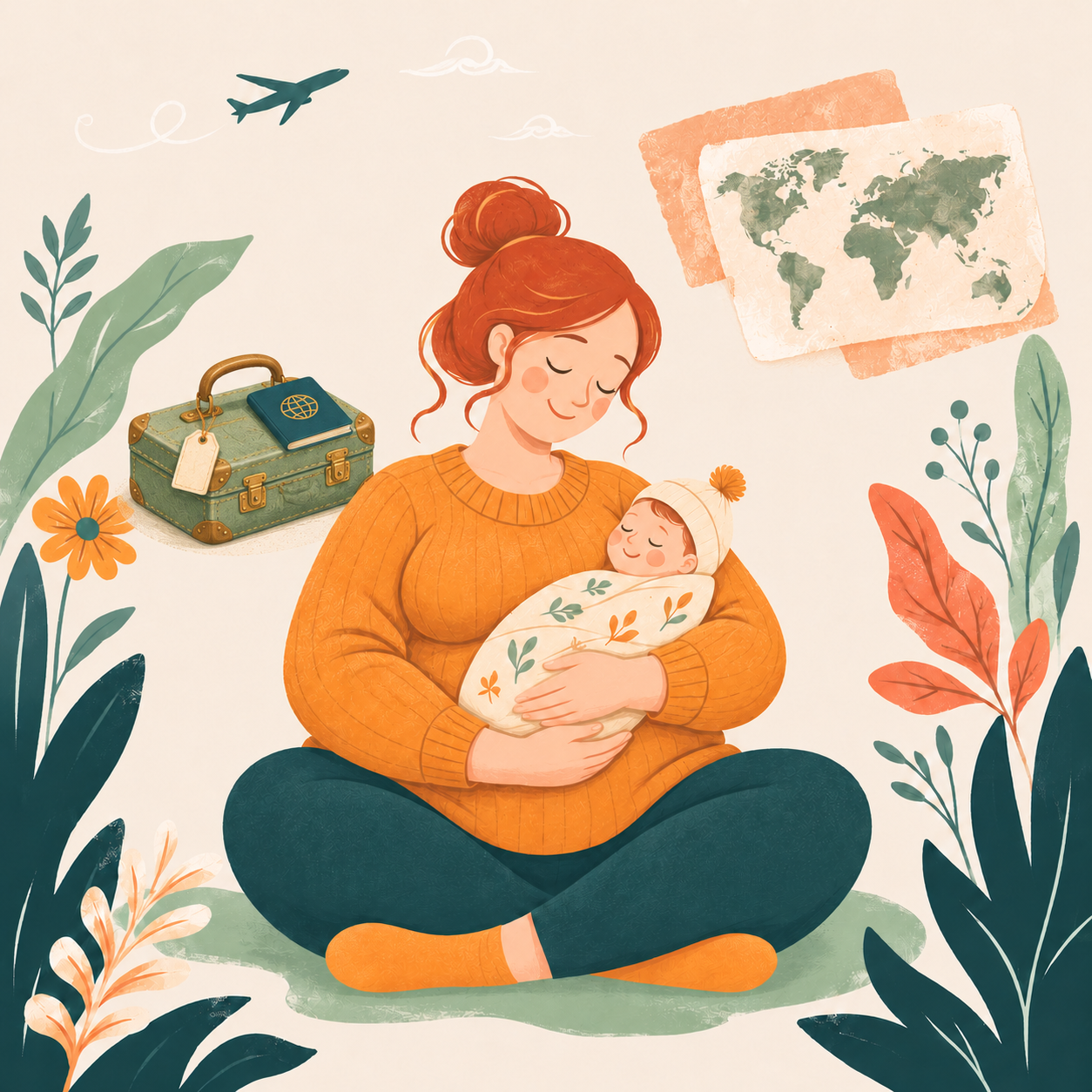
Giving birth is a profound life transition. It can bring emotional vulnerability, uncertainty, and changes in many aspects of our lives.
But what happens when we give birth in a country different from the one where we were born? Even when we feel relatively comfortable in our new country, pregnancy and birth can bring an additional layer of complexity. They may awaken unexpected feelings of loneliness, uncertainty, or longing for what is familiar.
Why giving birth abroad can feel overwhelming
During pregnancy and childbirth, many women seek a sense of safety and familiarity. We need an environment in which we feel safe enough to be vulnerable, let go of some of our need for control, and turn our attention inward.
We want to understand what is happening around us, trust the people caring for us, and know that our needs are understood.
When giving birth abroad, some of these familiar reference points may be missing. The healthcare system may work differently from what we know. Medical professionals may communicate in another language. Cultural expectations around childbirth, pain, medical interventions, and family involvement may be unfamiliar.
During childbirth, communicating in a second language can become particularly challenging. Even women who speak the local language fluently may struggle to express pain, fear, or emotional needs at certain moments.
Cultural differences can also influence how we experience care. What feels reassuring in one culture may feel distant or unfamiliar in another.
Another challenge can be the distance from family and close friends. People we would naturally turn to for emotional or practical support may not be nearby.
Feeling safe when giving birth abroad
In conversations with women who had given birth in different countries, one theme repeatedly emerged: the importance of feeling seen and emotionally supported.
Sometimes this support came from a partner or someone familiar. Sometimes it came from a midwife, nurse, doctor, or doula who offered help, warmth, and understanding.
One woman described being alone in the hospital after giving birth while her partner cared for their older child at home. A nurse noticed that she hadn't eaten, brought her food, and held her baby so she could finish her meal.
During my own second birth, I remember a nurse holding my hands, looking into my eyes, and gently guiding me to breathe together with her.
Both moments involved simple gestures that felt profound at the time. They communicated so much without the need for a shared verbal language.
Giving birth abroad can be a source of strength
While giving birth abroad can bring challenges, it can also offer experiences that strengthen our sense of independence, confidence, and personal choice.
For some women, being away from familiar social expectations creates space to approach childbirth in their own way and make choices with less pressure from those around them.
Living in another country may also introduce women to different approaches to childbirth. Some women discover possibilities that were less accessible or less common in their country of origin, allowing them to consider approaches they might not otherwise have explored.
Navigating pregnancy and birth in an unfamiliar environment may also strengthen our confidence in ourselves. Learning to ask for what we need, make our own decisions, and find our own sources of support can help us develop a greater sense of agency and security in ourselves and as mothers.
How to prepare emotionally for giving birth abroad
Birth naturally involves a degree of uncertainty. While we cannot anticipate or control everything, we can create anchors that help us feel safer and more supported.
For some women, these anchors come from practical knowledge and familiarity. Learning about the local healthcare system, understanding hospital procedures, and becoming familiar with the place where we plan to give birth can help reduce uncertainty. This might include visiting the hospital beforehand, knowing where to go when labour begins, or even finding out seemingly small but important details, such as where to park. When possible, getting to know the doctor or midwife who will be caring for us may also help create a sense of familiarity.
For others, an important source of reassurance may be knowing that someone can communicate with them in their native language. This might be a partner who can help express their needs when necessary, or a doula or midwife who speaks their language. Learning a few essential words in the local language may also help.
It can also be reassuring to have the contact details of professionals we might need after birth, such as a postpartum doula or breastfeeding counsellor. Even if we never need to contact them, knowing where to turn for support can reduce some of the uncertainty.
Other anchors are more personal and come from within ourselves.
Becoming familiar with our own responses to stress, practising breathing or grounding exercises, and identifying what helps us feel calmer are part of preparing for birth. Different practices can be explored before birth, so they feel more familiar when we need them.
Couples may also find it helpful to discuss emotional support in advance. This could include agreeing on a particular word or signal that communicates a need for reassurance, physical closeness, or a moment of quiet.
Familiar objects can also help create a sense of connection and security. A photograph of loved ones, music, a familiar scent, or a small object brought from home may provide comfort.
Preparing emotionally for birth is not about controlling how it will unfold. It is about identifying what may help us feel supported, even when things happen differently from what we expected.
It may be useful to reflect on a few questions:
- What are my main worries about giving birth abroad?
- What matters most to me during birth?
- What would help me feel informed, heard, and supported if things go differently than planned?
- What helps me when I feel stressed? Are there breathing, relaxation, or other techniques I could practise beforehand?
- What knowledge or preparation would help me feel more confident?
- How can I communicate my needs and preferences?
- Would having someone who speaks the local language help?
There is no single way to prepare emotionally for birth. What matters is having space to talk about the different aspects of the experience, explore personal needs and concerns, and discover what might be helpful. Giving birth abroad comes with its own challenges, but understanding what helps us feel safe and supported can make it easier to approach the experience with greater confidence.